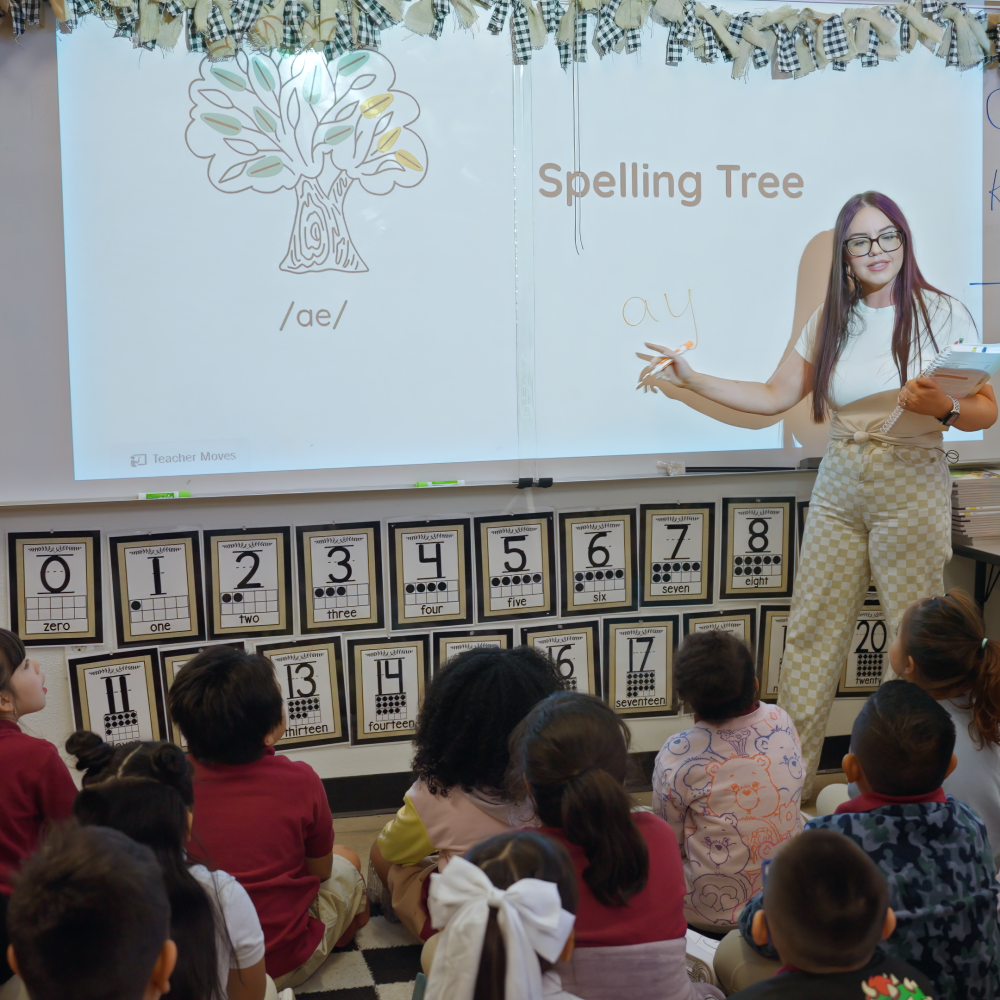
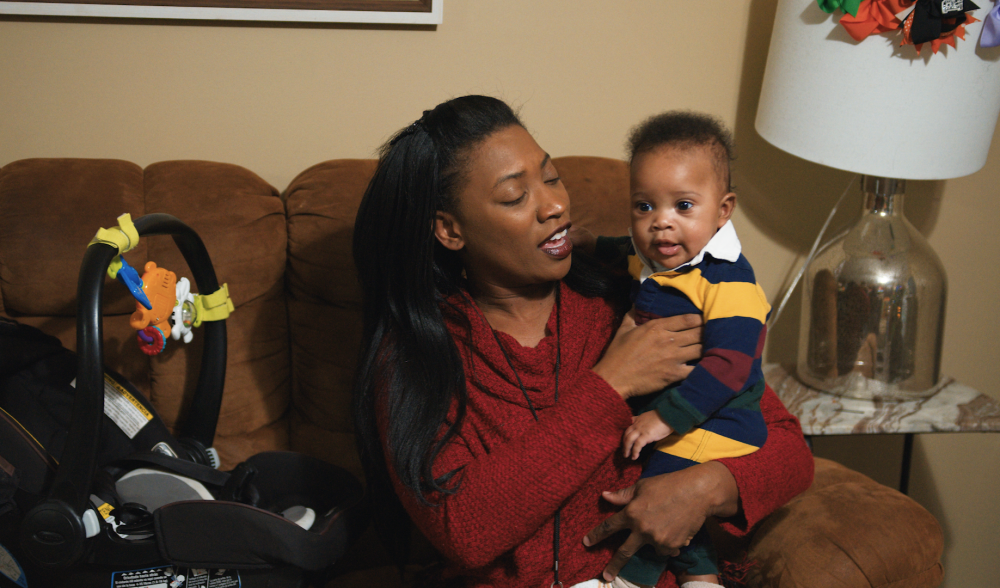
New mom Allison Millaway has a 45-minute commute to and from her job as an elementary school educator, and she prefers it that way.
Each morning, she bundles up baby Cillian and drives from her home in Chester County, Pa., across the border into Delaware. Allison drops him off at daycare before continuing on to teach multilingual learners in Wilmington’s low-income neighborhoods.
“It's a very long commute, but it's worth it for me, because if I were a teacher in Pennsylvania and worked closer to home, I would not be able to have any paid [parental] leave. So for my family, it works ... in order to access all the great benefits that Delaware has.”
In 2022, Delaware passed legislation offering 12 weeks of paid parental leave to new parents, including fathers and adoptive parents. The law is helping to recruit and retain great teachers like Allison. Perhaps most importantly, it provides vital stability and support for educators and their families through one of life’s biggest transformations – parenthood.
Today in the United States, few protections exist for teachers who have a newborn. According to new research from the National Council on Teacher Quality (NCTQ), more than half of teachers say they couldn’t take any paid parental leave after the birth or adoption of a child. Two-thirds of states offer no guaranteed paid parental leave for teachers beyond sick days. Among those that do, half provide only partial pay.
The findings by NCTQ, a Walton Family Foundation grantee, reinforce what teachers and school administrators already understand – that a lack of paid parental leave is a meaningful contributor to teacher attrition and workforce instability. Conversely, access to these benefits encourage experienced, highly-qualified teachers to stay in the classroom, ultimately improving outcomes for students.
Delaware State Rep. Melanie Ross Levin sponsored the legislation after watching her state struggle to keep teachers on the job beyond the five-year mark.
“We had a huge problem,” she says. For teachers that wanted to have a family, the state was “making it extra difficult on top of a job that's extra difficult.”
Rather than spending time recovering and bonding with their new baby, she says Delaware teachers were trying to time their pregnancies “like a DoorDash,” cobbling together vacation and sick leave, some of which was only partially paid.
“If it's not full pay, people are much more likely not to take it. You can't pay 80% of your mortgage.”
Nationwide, 15% of departing teachers cite personal or family reasons, including pregnancy and childcare. The implications of teachers leaving the profession are significant, with districts spending roughly $25,000 to replace a single teacher.
Rep. Ross Levin says that building a broad coalition of support and ensuring that the state, not districts, covered the cost of substitute teachers was key to passing paid parental leave in the state of Delaware.
In Arkansas, the state legislature recently passed similar legislation, which now provides 12 weeks of paid parental leave for full-time public school employees.
State Sen. Breanne Davis, a mother of four who was seven months pregnant when she was first sworn into office, says states need to make it easier for new moms to balance the dueling responsibilities of parenthood and work.
“The teacher is the face of the classroom. They set the temperature for the classroom, the learning environment, and if they're happy and feel like they're not having to make sacrifices for family time, then I think that impacts student learning,” she says.
“If you want to retain teachers and recruit more into the profession, you need to have high employee satisfaction. You want your people to be happy and excited to come to work every day.”
Casey Robinson teaches elementary school in Arkansas. The week she was due to give birth to her fourth child, Blue, the state legislature passed paid parental leave. “I gave birth to Baby Blue Thursday. School was supposed to start on Monday. If I didn't have the leave, I was going to be in a real pickle. I was still on bed rest. [Leave] meant I was able to recover and watch my other kids. It was a blessing.”
Dr. Jeremey Owoh, Superintendent of Arkansas’s Jacksonville North Pulaski School District, offers a different perspective on this new state policy.
“Our goal is to be a district school of choice, not just for scholars and families, but for educators and staff members as well. Twelve full paid weeks is definitely the game changer and a morale booster for staff, but it also helps administrators plan for substitutes and other opportunities in advance.”
The ability to plan, he says, comes from state funding for long-term substitute teachers. “As a district, we get reimbursed for those expenses, and our students get consistent instructional support.”
Dr. Owoh’s advice to other districts and states considering paid parental leave?
“You won’t find a more worthwhile investment than taking care of the people who are taking care of our young people in the community each and every day.”