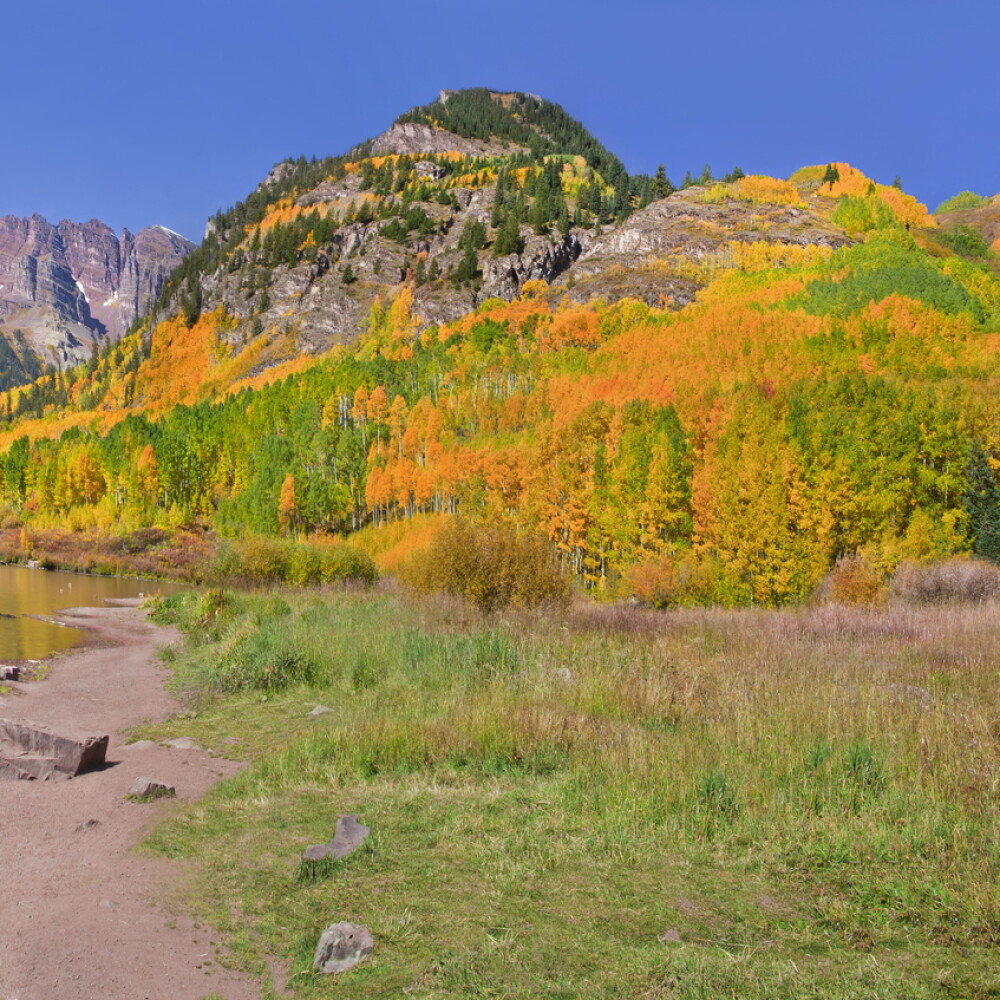
In 2012, the Waldo Canyon fire swept through the western end of Colorado Springs and the surrounding hills. By the time the blaze was extinguished it had killed two people, burned through more than 18,000 acres, destroyed hundreds of homes and caused millions of dollars in damage. Water infrastructure was also severely compromised. This included Rampart Reservoir, a source of local drinking water, as well as a major pipeline that was exposed and damaged by boulders and debris carried downhill by post-fire flooding.
For Colorado Springs Utilities, the fire reinforced what they already knew. More needed to be done to protect the infrastructure that delivers clean water to the more than 450,000 residents they serve. Utilities leaders also recognized that one of the most effective ways to safeguard water supplies against increasingly extreme weather is to invest in nature-based solutions that strengthen the health and resilience of forests, rivers and wetlands. They turned to beavers — some of nature’s most effective water managers — for inspiration.
A great way to create these healthier landscapes that protect and enhance water infrastructure is by mimicking the dams historically created by beavers.
“Healthy ponds, rivers, and aquifers create firebreaks and natural filters that allow sediment and contaminants to settle before water reaches the reservoirs used for drinking water,” says Yvonne Wetzig, Fountain Creek Watershed Resource Planner for Colorado Springs Utilities. “And a great way to create these healthier landscapes that protect and enhance water infrastructure is by mimicking the dams historically created by beavers.”
Using a cost matching grant from the Colorado Water Conservation Board’s Wildfire Ready Action Plan, Colorado Springs Utilities built 42 simulated beaver structures and post-assisted log structures in the North Catamount Creek area in 2025 and an additional 17 structures in 2026. These are small, loosely connected, manmade structures built from wood and other materials sourced from the local area. They are designed to work like or repair the structures naturally made by beavers to create wetter riparian areas and restore native vegetation.
As summers have become hotter and winters drier, the landscape in the North Catamount Creek area has shifted. Aspen and willows have been forced out and dense clusters of conifer trees and shrubs that create more fuel for wildfires have encroached on open meadows along the stream. The work done by Colorado Springs Utilities is designed to help return the area to its prior wetter and greener conditions.
As part of the project, the Walton Family Foundation is supporting the Riverscape Restoration Research Project. Through this work, researcher Joel Sholtes from University of Colorado Boulder is documenting how the structures trap sediment and affect water supply and quality.
The beaver mimicry structures slow water flows and make the river system more complex. That helps contaminants including sediment settle out before reaching water infrastructure and reservoirs used to store drinking water supplies.
“Sediment can be very costly to clean out, so that is a big selling point. And by recharging the aquifer we’re hoping to be less reliant on spring runoff from the snowpack and see less loss due to evaporation,” says Wetzig.
“With this research, we’re able to see the groundwater data and the water table become recharged. That's very exciting and we wouldn’t be able to do that without Joel's help.”
The results have been dramatic. Now rather than simply running from point A to point B through a narrow channel, flows along this portion of North Catamount Creek spread across the valley bottom and raise the groundwater table — restoring historic wetlands, filtering water and creating natural firebreaks. By late 2025, the water table had gone up about a foot as a result of the work.
And the local conifers that had encroached on the area? They were used in the structures themselves, further protecting the area from wildfire damage. Utilizing nearby trees and shrubs to create the beaver mimicry structures allowed the utility to maximize the impact of the work.
“If we had just removed the trees it would have reduced fuel for wildfires but it wouldn’t have created the wetted areas that provide natural firebreaks and filter sediment to create cleaner water supplies,” Wetzig says. “And if we had just put in the structures to slow down the water without removing some of the trees it would have left the forested area more likely to spark a wildfire.”
The success of the project has led the utility to begin designing another project just west of Colorado Springs at South Catamount Creek. That project would also rely on local materials to create the structures. In this case that means using peat from the surrounding area to build structures out of soil. These diverse structures show how this kind of restoration work can be done by different water managers in a wide range of situations.
“The North Catamount project is using woody structures while the South Catamount work would rely on grading and soil. There are a lot of different approaches for this kind of low-tech process-based restoration that you can use depending on the system, your goals and what you have to work with.”
For Wetzig, the financial benefits for water utilities investing in these strategies are clear.
“The financial impacts from the Waldo Canyon fire were so much more significant than what it took to make this project happen and protect against future fires. Colorado Springs Utilities has put in $1.1 million, and we had a $1.3 million dollar grant from the CWCB. While that is a lot of money, it is nothing compared to the multi-million dollars it costs to repair a pipeline or replace a tank."
The results of the project are ongoing, with the area continuing to become wetter and greener.
“I like to measure the results by what I call a footwear metric,” says Wetzig. “I used to be able to go out there in just my hiking boots and get around just fine. And then as the area started to change with this work I needed rain boots. Now I need waders and a safety buddy. The impact we’ve seen is really exciting.”